
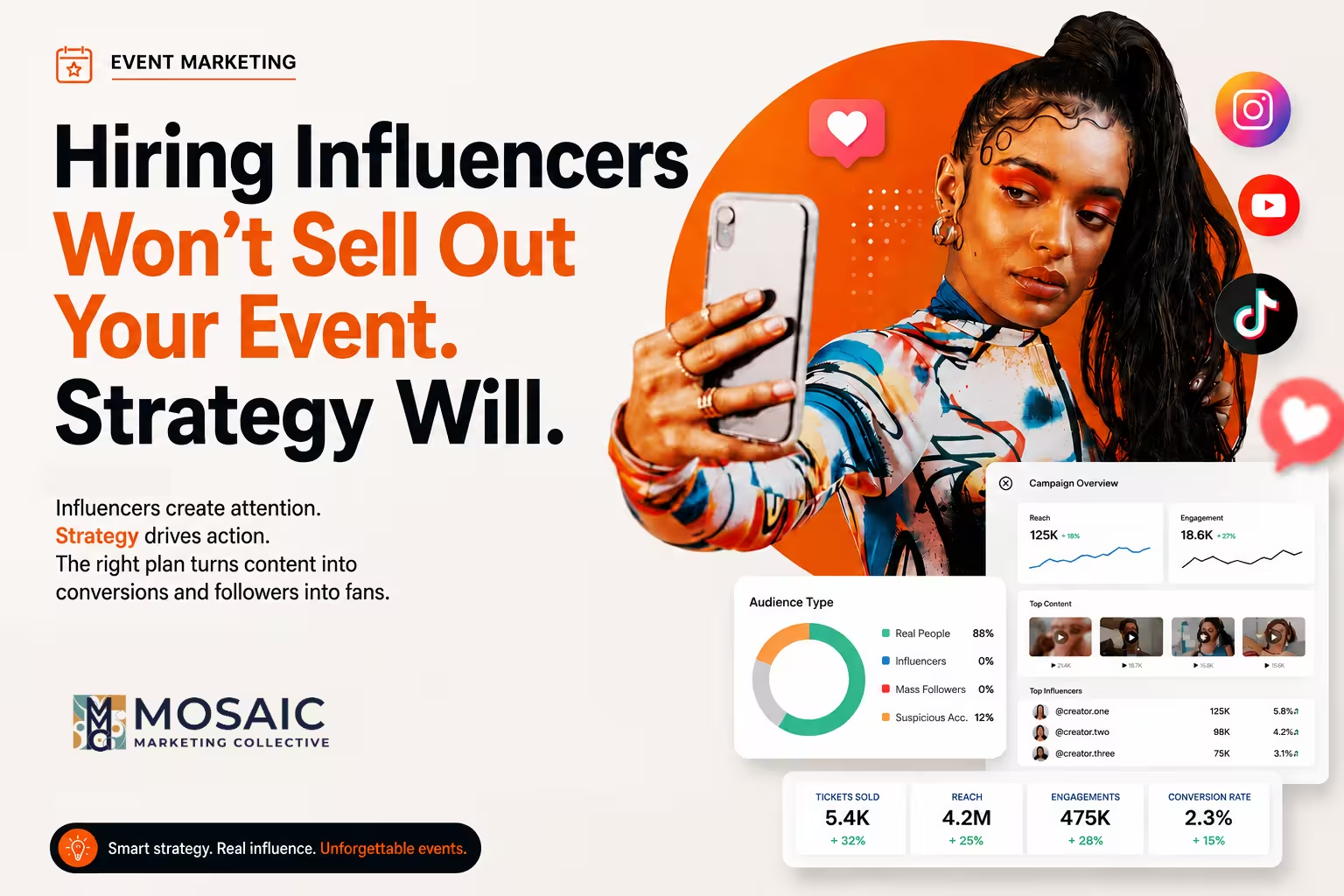
You’ve seen this play out before.
An organizer announces a big event, hands a chunk of the budget to a few influencers, and waits for the magic to happen. The posts go up. The likes roll in. Comments flood the timeline. Everyone’s talking about it.
Then ticket sales open, and… not much happens.
The usual verdict? “Influencer marketing doesn’t work.”
Except it does. What didn’t work was the plan behind it, or the lack of one.
Influencer marketing is still one of the sharpest tools in event promotion. But it only pays off when it’s built into a real campaign, not treated as a quick fix.
Influencers Aren’t Your Sales Team
Here’s the mix up most organizers make: they expect influencers to sell tickets directly. That’s not their job.
Their job is to build awareness, lend credibility, and get people talking. A single post from a creator isn’t going to move hundreds of tickets on its own, no matter how big their following is. Events that actually sell out build momentum over weeks, sometimes months, through a story that unfolds across several channels at once.
A few habits tend to sink these campaigns before they start:
- Bringing influencers on board too close to the event date
- Handing them a poster and calling it a brief
- Picking creators based on follower count alone
- Judging success purely by direct ticket sales
- Running influencer content separately from the rest of the marketing plan
Fix even a couple of these and results shift noticeably.
Treat Them Like Storytellers, Not Billboards
A lot of brands still use influencers as digital flyers: post this, tag that, done. That’s a wasted opportunity.
Audiences don’t want another ad. They want to feel like they’re already part of the experience before it happens. That means:
- Rehearsal clips and soundchecks
- Backstage access
- Venue walkthroughs
- Artist interviews
- Getting-ready and outfit content
- Real fan reactions
A poster tells someone an event exists. A well shot behind the scenes video makes them feel like they’d be missing out by not going. That emotional pull is where influencers actually earn their fee, not by repeating “buy your ticket” in every caption.
Bigger Isn’t Better. Relevant Is.
Follower count is the easiest number to chase and often the wrong one to chase.
A creator with 25,000 followers who are genuinely into music or nightlife will usually outperform someone with ten times that audience and barely any real engagement. The question isn’t how many people follow them. It’s whether the right people follow them.
Before signing anyone, ask:
- Does their audience actually match the people we want at this event?
- Do their followers trust what they recommend?
- Is their content genuinely engaging, or just polished?
- Have they promoted similar events successfully before?
- Does their personal brand fit the vibe we’re building?
These answers tell you far more than a follower count ever will.
Timing Beats Reach, Every Time
This is the part most campaigns get wrong. Influencers get brought in a few days before the event, once most people have already made weekend plans and spent their entertainment budget elsewhere.
A campaign that builds anticipation over time performs better than one that shows up loud and late. Here’s a structure that works:
Announcement — introduce the event, spark curiosity Launch — tell the story behind it: the artists, the concept, the why Build up — behind the scenes content, interviews, countdowns Event week — daily content, creator experiences, more direct engagement Event day — live coverage, real time reactions, energy on the ground Post event — highlight reels, testimonials, content that sets up the next one
Each phase does a different job. Together, they keep the event in front of people long after the first post goes up.
Influencers Are One Channel, Not the Whole Campaign
Influencers matter, but they’re one part of a bigger machine. Events that consistently sell out usually combine several channels working together:
- Strong content creation
- PR and media coverage
- Paid digital ads
- Email marketing
- WhatsApp community engagement
- Outdoor advertising
- Brand partnerships
- On the ground activations
- Influencer collaborations
No single channel carries the whole load. The more these pieces reinforce each other, the stronger the campaign performs as a whole.
The Real Question to Ask
Influencers haven’t stopped working. If anything, they matter more now that people spend so much time watching creator content over traditional ads.
What’s changed is the expectation. They’re not miracle workers who can sell out a venue with one post. They’re storytellers, conversation starters, and community builders. Give them a real strategy to work inside of, and they become one of the most valuable parts of your campaign.
So the question isn’t whether your next event needs influencers.
It’s whether your influencer strategy is built to do more than collect likes.
How Mosaic Marketing Collective Can Help
At Mosaic Marketing Collective, we build event campaigns around strategy first, not guesswork. That means finding the right creators for your audience, shaping content that actually gets watched, managing those relationships end to end, timing the campaign properly, and tracking performance against the bigger picture, not just vanity metrics.
Because the real goal was never just getting people to talk.
It’s turning that attention into people walking through the door.